Author Archive

Jack Grunsky
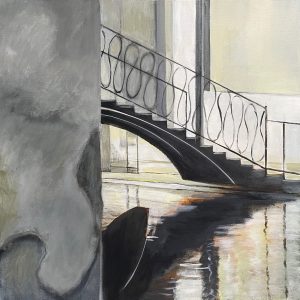
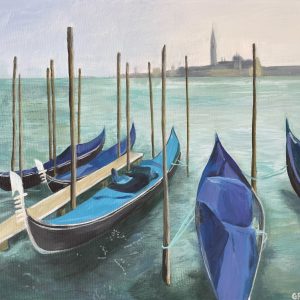
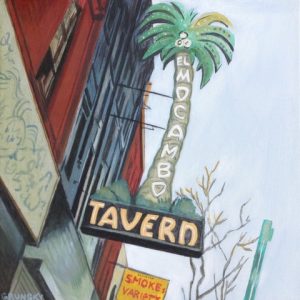
Everyone experiences art from a unique personal perspective. Jack Grunsky would describes his abstract art as a kind of visual poetry or music expressed through the energy and vibration of colour, form, rhythm and design, and his realism works as a joyful interaction and silent dialogue with the subject matter. Making art relaxes his mind and he surrenders to the process. When a work competes itself, he feels liberated and acknowledges a language that communicates what can’t be spoken.
Available works


William “Grit” Laskin
William ‘Grit’ Laskin is a renowned Canadian luthier who has crafted guitars since 1971 for collectors and musicians including k.d. lang, Tom Cochrane, and Rik Emmett. He also uses his guitars as “canvases” for his engraved inlay art, and as a tool for communication. Laskin is also a multi-instrumentalist singer-songwriter, appearing at occasional clubs and music festivals. In 1996 he founded Borealis Records with Ken Whiteley, Canada’s first national folk music label.
This guitar, a tribute to Pete Seeger (1919-2014) features artwork and text highlighting major influences and events in Seeger’s life, as well as his interest in politics and environmental activism.
Written on the body (with alcohol-based pigment) is the phrase he routinely wrote on his banjo head.
In the headstock we see the banjo-playing younger Pete, with his wife Toshi behind him. On his banjo, given that his political statement is now on the guitar top, Laskin wrote the title of one of his most well-known songs: WHERE HAVE ALL THE FLOWERS GONE.
On the fretboard, the first thing you see is a very large version of Pete’s standard signature scribble of a 5-string banjo done in Red Coral stone. This runs the length of the neck and into the headstock, serving as the visual ‘spine’ of the narrative.
Moving from the nut to the higher frets, we see Woody Guthrie, then the phrase TALKING UNION, which was the title of the first song collection put out by Almanac Singers (the precursor to the Weaves), a signer’s collective that included Woody and Pete. Intertwined with “Talking Union” are the words “How to Play,” which is the first phrase of the title of Pete’s famous banjo instruction book: “How To Play The 5-String Banjo”, which came out in the late 1940s.
Next we see the other three members of The Weavers, as depicted on the cover of their most famous album: Live at Carnegie Hall, 1955. Then we see the chair of the House Un-American Activities Committee, US Senator Joe McCarthy, depicted upside down and in ‘cowardly’ yellow. Around him are the first words from Pete’s actual statement to the Committee: “I refuse to answer…” Pete was of course blacklisted for decades because he refused to name names.
Finally, we see the upper sails of the sloop Clearwater, which Pete sailed up the Hudson River year after year to protest its pollution. He and other musicians would stop in each town, perform a concert, and then encourage political action to clean up the river. They were successful – the Hudson is much cleaner, fish species have returned, and there is even a permanent environmental music festival called Clearwater.


Mae Moore
Mae Moore wears many hats. As a composer, she co-wrote the massive hit “Heaven in Your Eyes” for the Top Gun soundtrack. As a recording artist, she was a major label success story on CBS/Sony, scoring nine top forty hits, two Juno nominations and two SOCAN Awards for commercial radio airplay, as well as having her songs placed in several television series. She has toured and shared the stage with a diversity of musicians including Marianne Faithful, Morrissey, Crosby, Stills and Nash, John Hiatt, and Pete Seeger to name but a few.
As an indie artist, she and her husband, slide guitarist Lester Quitzau, were the focus of a BravoTV documentary project, when their collaborative recording “Oh My!” was released in 2004. More recently, Mae received a Canadian Folk Music Award nomination for her latest (2011) recording and companion art book titled, Folklore. Her guitar style of jazz and folk/rock is built on a foundation of alternate tunings that sets her sound apart.
Born in Brandon, Manitoba in February of 1956, Mae is Canada’s quintessential bohemian, a musician, painter, and longtime environmentalist who has lived all over Canada, and now lives on a small island in British Columbia, growing organic apples, and painting.


Michael “Duke” Robillard
Rhode Island native Michael “Duke” Robillard has led a flourishing career as a guitarist, vocalist, songwriter, bandleader, studio sideman, producer, label operator, and educator. In 1967 he founded Roomful of Blues with pianist Al Copley, eventually going on to work with rockabilly musician Robert Gordon and then to the first iteration of the Legendary Blues Band. He began his solo career in 1981 with the Duke Robillard Band (later renamed The Pleasure Kings) and replaced Jimmie Vaughan with The Fabulous Thunderbirds in 1990.
Duke has produced albums by the likes of Billy Boy Arnold, Joe Louis Walker, Otis Clay, Billy Price, and many more; he has recorded two collaborations with Herb Ellis, and paired with his successor in Roomful, Ronnie Earl; he holds a seat in the New Guitar Summit with J. Geils and Gerry Beaudoin; he has studio credits for Bob Dylan, Ruth Brown, Johnny Adams, and others; in 2006, he toured with Tom Waits. Duke has even launched his own labels with Jesse Finkelstein, Blue Duchess/Shining Stone.
Duke has received many honours for his work including Grammy nominations, Handy Awards, and Blues Music Awards; his latest release, Duke Robillard and his Dames of Rhythm, features enjoyable renditions of ‘20s and ‘30s swing tunes. He remains based in Rhode Island where he pursues his passions as a musician, producer, gardener, photographer, and visual artist.
Available works


Marc Jordan
Marc Jordan (b. 1948) is a Canadian singer-songwriter, record producer, session musician, actor, and visual artist. He has written songs for a number of well-known artists such as Joe Cocker, Diana Ross, and Rod Stewart (including his worldwide hit, “Rhythm of my Heart”). Jordan was named best producer with Steven MacKinnon at the 1994 Juno Awards for Reckless Valentine and he has gone on to produce 12 more of his own albums. In 2014, he was named Chair of Slaight Family Music Lab at Norman Jewison’s Canadian Film Centre. Jordan also paints and refers to his art as ‘Flatmusik’.
Available works


Steve Coffey
Steve Coffey has been an integral part of the Canadian art and music scene for many years. He has curated travelling exhibitions, created large-scale public sculptures, taught college, and conducted many workshops and art residencies. After finishing his formal training in 1990 with an MFA, Steve practiced formalist metal sculpture in Central Alberta but eventually gave in to his love of drawing and representation and was seduced by the immediacy and challenges of oil paint. He began exploring the medium full time in 1995. Steve has exhibited extensively and his paintings can be found in numerous private and public collections throughout North America, Europe, and Asia and he is represented across Canada by many well-known art galleries.
Steve’s music has received critical acclaim over the course of ten albums to date and he and his band have performed regularly and been heard on many radio airwaves over many years, from commercial to college to frequencies in between.
Steve’s work triggers the feeling of familiarity that somewhere at sometime the viewer has seen or felt this, an intimate mystery that lives on the tip of the tongue. It’s accessible for simply what it is, a painting or a song left to a person’s interpretation.
Available works



Hugh Thompson
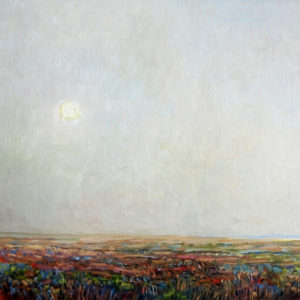
Musician and prolific visual artist of the Classic/Impressionist style, Hugh Thompson was born in Armagh, Ireland, and immigrated to Canada in 1974. He paints the land and sky in Ireland, Canada, America, and Europe, enjoying the Great Salon style of exhibition. Thompson is a member of the Arts and Letters Club in Toronto as well as the Royal Dublin Society in Ireland; as an adjunct Professor at the School of Architecture, University of Waterloo, he gives drawing classes to architecture students. Now a resident of Cambridge, Ontario, he owns Landreth Gallery and Art Consulting as well as the Thompson Centre for Art and Design, which he operates along with Deirdre and Jason Thompson. You can see more of his works at the Oriel Gallery, Dublin, and the Libby Gallery, Toronto.


Jean Smith
Jean Smith is a singer and lyricist from Vancouver, best known for her work with the two-piece indie rock band Mecca Normal. She is also a painter, novelist, lecturer, and filmmaker. Smith is considered an influential figure in the “riot grrrl” movement of the 1990s and much of her work deals with the topics of feminism and anti-authoritarianism. In addition to designing the posters and album art for Mecca Normal, Smith has created an extensive series of watercolour self-portraits begun in her teenage years that exhibited at Olympia’s Ladyfest Art Shows in 2000, 2003, and 2004.
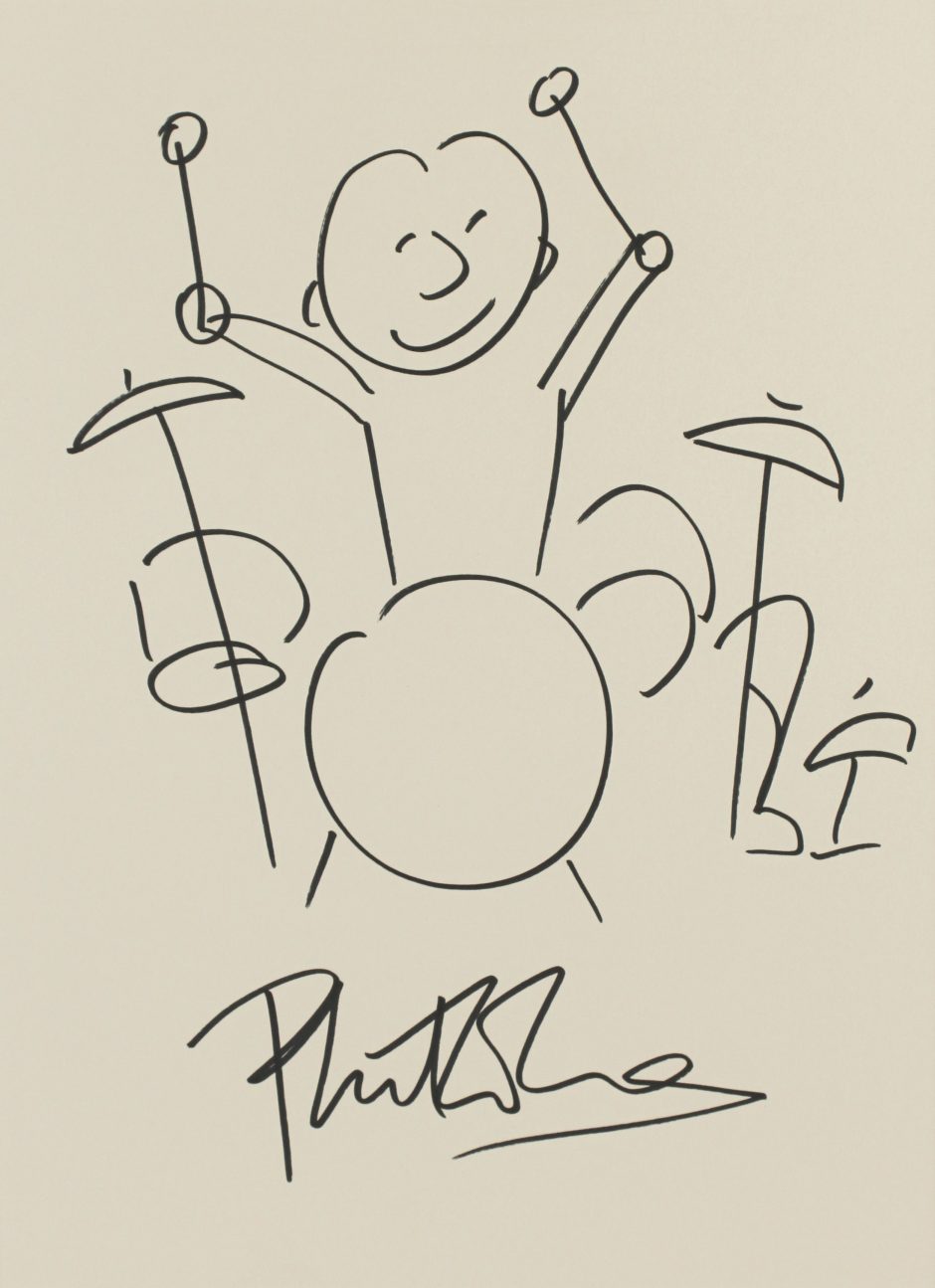
Phil Collins
Phil Collins is an English singer, songwriter, instrumentalist, record producer, and actor. He is the drummer and lead singer of Genesis as well as a solo artist. Collins has won several awards, and has been inducted into both the Songwriter’s Hall of Fame and the Rock and Roll Hall of Fame.

Timothy Wilson Hoey
The National Post wrote that “If Hoey were any more Canadian, he would be a doughnut.”
Primarily self-taught, Timothy was heavily influenced by the artists and musicians in his home town of Victoria, finding himself in numerous bands featuring a plethora of musicians from Stephen McBean, Paul Pigat, Carolyn Mark among others. It was perhaps having the great fortune to surround himself with outstanding musicians that led to him spending his time painting instead of practicing his guitar. His band the Metronome Cowboys is still fondly remembered by Paul Pigat as the ‘funnest band I’ve ever been in’.
Timothy Wilson Hoey’s art is informed by a sense of place, time, and emotion. His O-Canada collection resonates with Canadians – domestic and abroad – by exploring what we define as home.
Timothy captures a feeling of reminiscence in seeing a local landmark, gone, but not forgotten. He captures the pride we feel when we reflect upon historical figures that helped carve Canada’s lasting legacy in this world. He captures the memory of a double-double enjoyed on a crisp winter’s morning.


